Learning Designed for the Real World
At Akoto Dalizu Premier Academy, we deliver Kenya’s Competency Based Curriculum with integrity, creativity, and a deep commitment to every learner’s potential.
A New Approach to Education — Built for This Generation
Our Curriculum
Kenya’s education system has undergone one of its most significant transformations in a generation. The shift from the 8-4-4 system to the Competency Based Curriculum (CBC) represents more than a change in syllabus — it represents a fundamental rethinking of what education is for, and what it should produce.
The old system asked: What does this child know? The CBC asks a better question: What can this child do?
This distinction matters enormously. In a world that is changing faster than ever — where the jobs of tomorrow do not yet exist, where collaboration, creativity, and critical thinking are the currencies of success — an education system that only rewards rote memorisation is no longer enough.
The CBC was designed to change that. And at Akoto Dalizu Premier Academy, we deliver it the way it was meant to be delivered — not as a bureaucratic requirement, but as a genuine philosophy of learning.
The Competency Based Curriculum — Explained Simply
Understanding the CBC
The Competency Based Curriculum (CBC) is Kenya’s current national curriculum framework, developed by the Kenya Institute of Curriculum Development (KICD) and adopted by the Ministry of Education. It replaces the former 8-4-4 system and is built on a foundational conviction: that every learner has unique strengths, and education should develop competencies — not just content knowledge.
What are competencies? Competencies are the skills, knowledge, values, and attitudes that enable a person to perform effectively in real-life situations. They go beyond what a child can recall in an examination — they capture what a child can do, think, create, and contribute in the world.
The Seven Core Competencies of the CBC:
How the CBC is Organised
A Pathway from Early Childhood to Senior School
The CBC organises Kenya’s education pathway into clearly defined levels, each building on the one before. At ADPA, we offer three of these levels — providing a seamless, consistent educational journey from your child’s very first day of school through to the end of Junior School.
What the CBC Looks Like at Every Stage of Your Child's Journey
CBC by Level at Akoto Dalizu Premier Academy
PRE-PRIMARY (PP1 & PP2)
The CBC Pre-Primary framework is built around the understanding that young children learn best through play, exploration, story, movement, and meaningful relationships. Our ECDE programme is not about pushing academic content down to four-year-olds — it is about meeting children exactly where they are and building the foundations that make everything else possible.
Learning Areas at Pre-Primary Level:
- 🗣️ Language Activities — Early literacy in English and Kiswahili through phonics, rhymes, storytelling, and pre-reading and pre-writing activities
- 🔢 Mathematical Activities — Numbers, shapes, patterns, sorting, and measurement through hands-on discovery
- 🌍 Environmental Activities — Exploring the natural world, community life, hygiene, and personal safety
- 🎨 Creative Activities — Art, craft, music, and movement for expression, imagination, and fine motor development
- 🏃 Psychomotor Activities — Gross motor development through physical play and coordination activities
- ✝️ Religious Education & Values — Age-appropriate moral and spiritual foundations: kindness, respect, honesty, and gratitude
Assessment at Pre-Primary: Assessment is observational, continuous, and holistic — no formal examinations. Teachers observe, record, and report on each child’s development across all learning areas, communicating progress to parents through regular reports and conversations.
PRIMARY SCHOOL (GRADE 1–6)
The CBC Primary School framework is organised into Lower Primary (Grade 1–3) and Upper Primary (Grade 4–6), with a progressive increase in complexity, independence, and depth of learning across all six years.
Learning Areas at Primary Level:
- 📖 Literacy — English, Kiswahili, and Kenya Sign Language: reading, writing, speaking, and listening at increasing levels of sophistication
- 🔢 Mathematics — Number operations, fractions, geometry, data handling, and problem-solving — always connected to real-world application
- 🌍 Integrated Science — Inquiry-based exploration of the natural world, scientific concepts, and environmental awareness
- 🌱 Agriculture & Nutrition — Practical agricultural skills, food science, and nutrition knowledge rooted in Kenya’s context
- 🎨 Creative Arts & Crafts — Art, music, drama, and craft as vehicles for imagination, emotional expression, and innovative thinking
- 💻 Pre-Technical & Applied Technology — Design, practical skills, spatial reasoning, and foundational technical knowledge
- 🤸 Physical & Health Education — Fitness, team sports, and health education for the whole child
- ✝️ Religious Education — CRE and/or IRE grounding learners in values, ethics, and spiritual awareness
- 🌐 Social Studies — Community, history, geography, civics, and global citizenship
Assessment at Primary Level: The CBC uses continuous and summative assessment — no single high-stakes examination determines a learner’s future. Progress is tracked through classwork, projects, observation, end-of-topic assessments, and end-of-term reports. Learner portfolios document growth over time and are a valued record of each child’s journey.
JUNIOR SCHOOL (GRADE 7–9)
The Junior School framework builds on Primary foundations with greater academic rigour, subject specialisation, and deliberate attention to the personal and career development of the adolescent learner. It culminates in the Kenya Certificate of Junior School Education (KJSE) at the end of Grade 9.
Learning Areas at Junior School Level:
- 📖 English — Advanced reading, writing, comprehension, grammar, and oral communication
- 🗣️ Kiswahili — Literature, composition, comprehension, and oral proficiency in Kenya’s national language
- 🔢 Mathematics — Algebra, geometry, statistics, probability, and financial literacy
- 🔬 Integrated Science — Biology, Chemistry, and Physics concepts in an integrated framework
- 💻 Pre-Technical & Applied Technology — Design thinking, technology application, and practical problem-solving
- 🌍 Social Studies — History, Geography, and Civics in a Kenya, Africa, and global context
- 🌱 Agriculture & Nutrition — Advanced agricultural practice and food systems knowledge
- 🎨 Creative Arts — Music, visual arts, drama, and creative expression at a higher level
- 🤸 Physical & Health Education — Adolescent fitness, team sports, and comprehensive health education
- ✝️ Religious Education — CRE and/or IRE with emphasis on ethics, values, and personal development
Career & Interest Pathway Exploration: A distinctive feature of the Junior School CBC is its intentional integration of career awareness and interest exploration. Learners are guided to reflect on their strengths, interests, and aspirations — laying the groundwork for informed Senior School subject choices and long-term life planning.
Assessment at Junior School Level: Assessment combines formative and summative approaches — classwork, projects, practicals, end-of-topic tests, learner portfolios, and end-of-term reports. The Kenya Certificate of Junior School Education (KJSE) is awarded upon successful completion of Grade 9.
How ADPA Delivers The CBC
The Akoto Dalizu Premier Academy Difference
The CBC as a Philosophy, Not Just a Syllabus
Many schools in Kenya are delivering the CBC. What sets ADPA apart is not that we follow the curriculum — it is how we follow it.
👩🏫 Qualified, Trained Teachers Every teacher at ADPA has received professional training in CBC delivery. They understand the philosophy behind the curriculum, not just the content. This means they teach for understanding, not for examination performance.
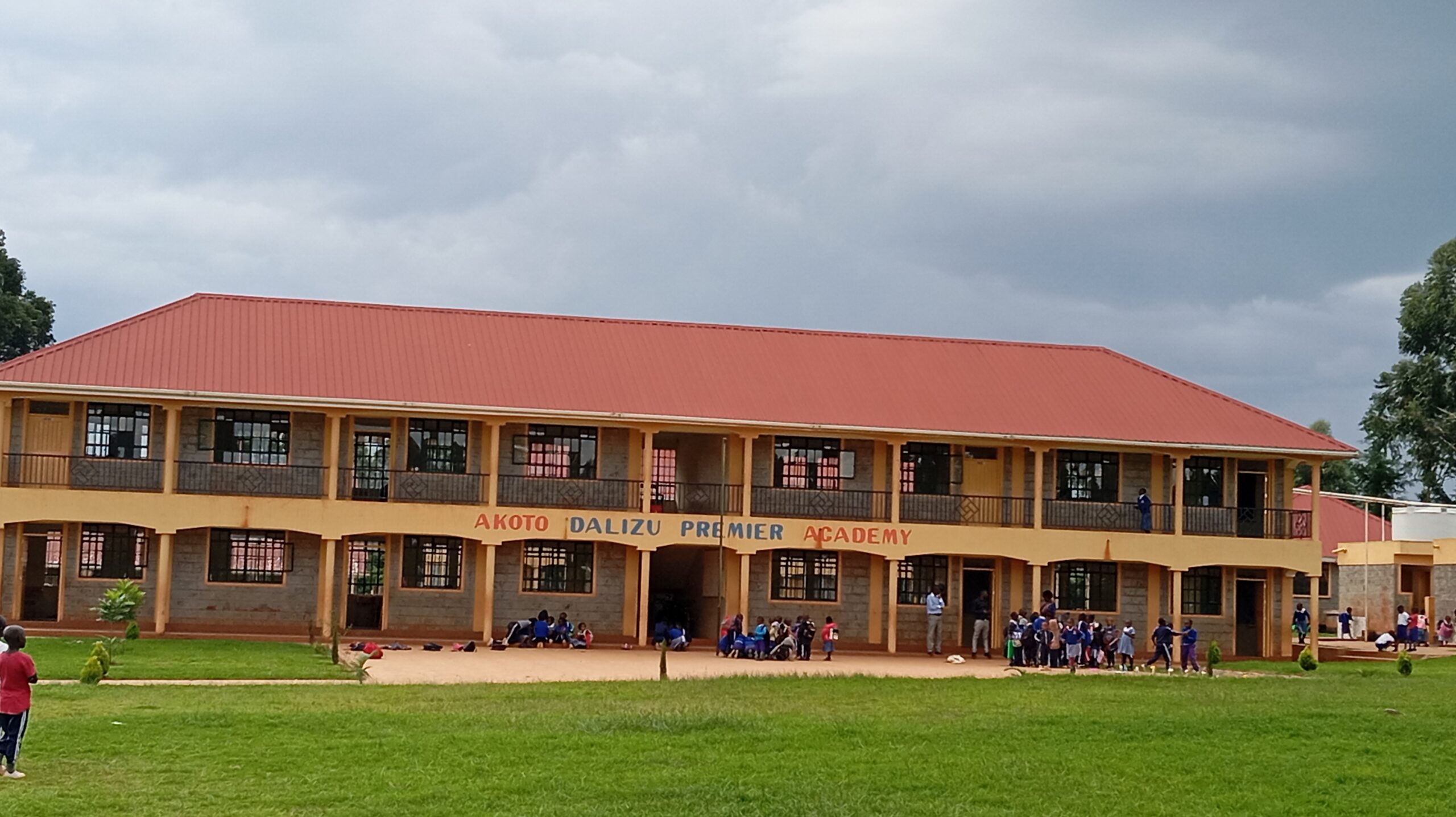
🏫 Purpose-Built Learning Environment The CBC demands a learning environment that supports exploration, creativity, and collaboration — and our school was built for exactly that. Bright, spacious classrooms with natural light and ventilation. A well-resourced library. A dining hall that models community. A big lawn playing field that makes physical education a genuine priority. Clean running water throughout.
👥 Small Class Sizes The CBC places significant emphasis on individual learner progression — and that requires teachers who actually know each learner. Our class sizes are kept deliberately small to ensure that no child is lost in a crowd.
📁 Learner Portfolios We implement learner portfolios with rigour and care. These are not decorative folders — they are living records of each child’s growth, used by teachers to inform instruction and by learners to develop self-awareness and pride in their progress.
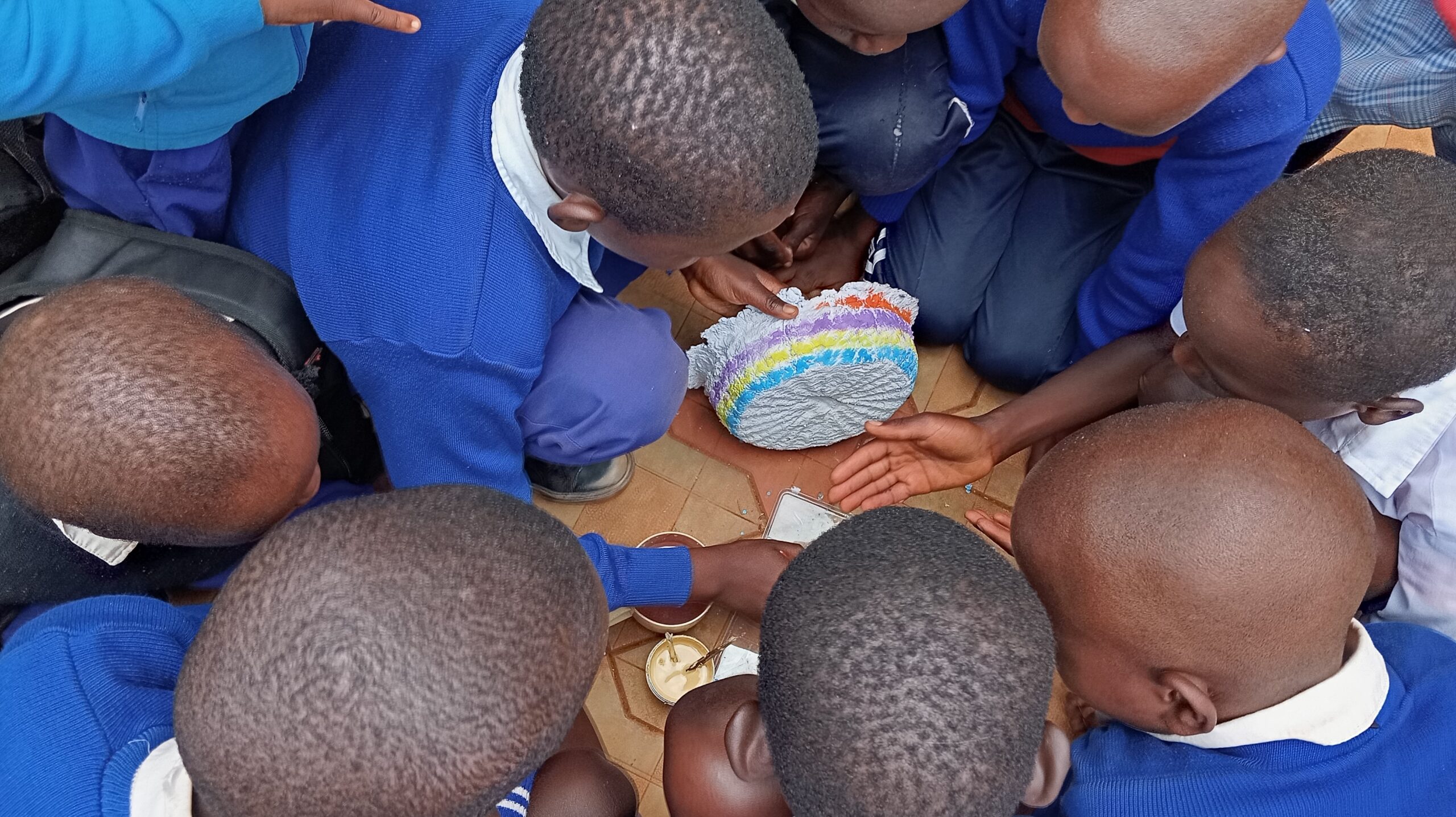
🎨 Project-Based Learning Projects are at the heart of CBC assessment and pedagogy. At ADPA, projects are planned, supported, and assessed seriously — developing research skills, creativity, teamwork, and the ability to present and defend ideas.
🤝 Parent Partnership The CBC explicitly recognises parents as co-educators. We take this seriously. Through regular reports, parent engagement sessions, and an open-door policy, we keep families informed, involved, and empowered to support their child’s learning at home.
📊 Continuous Assessment We track each learner’s progress continuously — not just at the end of the term. This means we identify gaps early, intervene quickly, and celebrate milestones as they happen.
CBC Values
Competence Without Character Is Incomplete
The CBC is explicit that education must produce not just competent individuals, but good citizens — people of character, integrity, and purpose. This is a priority we share deeply at ADPA.
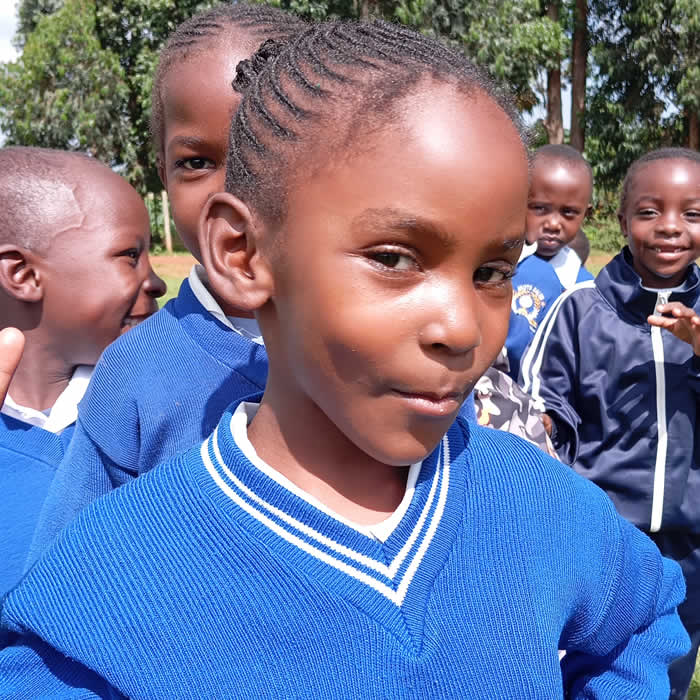
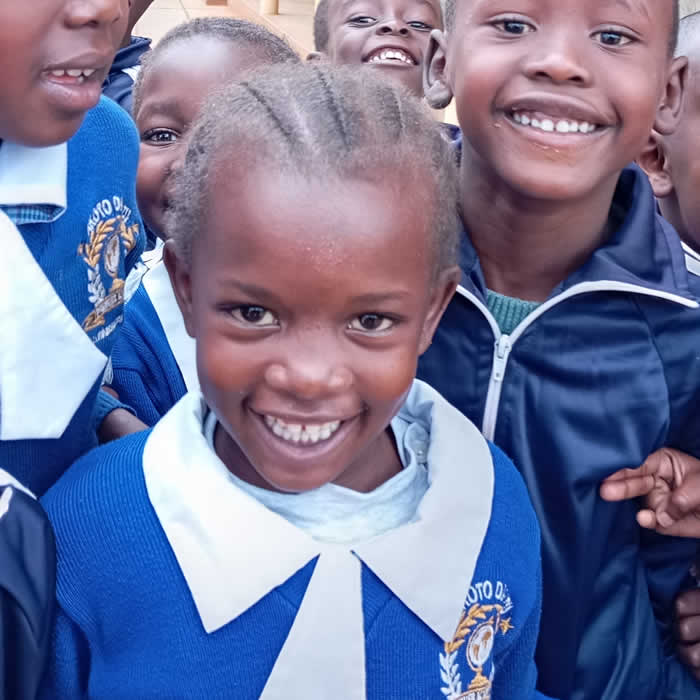
Across all our programmes, from PP1 to Grade 9, we weave values education into the fabric of daily school life. Not as an add-on or a separate subject, but as a living thread in everything we do.
We cultivate:
🤲 Respect — for self, for others, for the environment, and for authority
💡 Integrity — doing the right thing, even when no one is watching
🌿 Responsibility — owning one's choices, effort, and impact
& Character Education
❤️ Empathy — seeing others, understanding their experience, and responding with kindness
🏆 Excellence — giving one's best, not as a performance, but as a personal standard
🙏 Spiritual Grounding — a faith-informed moral compass that anchors learners in something beyond themselves.
These are not values we talk about. They are values we live — in how our teachers engage with learners, how learners treat each other, how we handle mistakes, how we celebrate achievement, and how we welcome every family through our gates.
Frequently Asked Questions About The CBC
Your Questions About the CBC — Answered
1. What happened to the 8-4-4 system?
The 8-4-4 curriculum has been phased out and replaced by the CBC (also referred to as the 2-6-3-3-3 system). The new pathway is: 2 years Pre-Primary + 6 years Primary + 3 years Junior School + 3 years Senior School + 3 years University. ADPA delivers the first three levels of this pathway.
2. Does the CBC have national examinations?
The CBC moves away from a single high-stakes exam determining a child’s future. However, there is a nationally recognised assessment at the end of Junior School — the Kenya Certificate of Junior School Education (KJSE) — awarded at the end of Grade 9. This is the qualification that opens the door to Senior School.
3. How will I know how my child is progressing without exams?
Progress in the CBC is communicated through continuous assessment records, learner portfolios, and detailed end-of-term reports — giving you a richer, more accurate picture of your child’s learning than a single exam score ever could. At ADPA, we also maintain regular communication with parents and welcome conversations about your child’s progress at any time.
4. Is the CBC good for my child?
We believe it is — and the evidence supports this. A curriculum that develops competencies, nurtures creativity, values practical skills, and attends to the whole child produces learners who are better prepared for the realities of the modern world. It is a significant improvement on a system that measured intelligence by how well a child could memorise and reproduce content.
5. What is a learner portfolio?
A learner portfolio is a curated collection of a child’s work — projects, creative pieces, assessments, reflections — that documents their learning journey over time. It is a key assessment tool in the CBC and a source of great pride for learners who can literally see how much they have grown.
6. Does ADPA offer tutoring or remedial support for learners who are struggling?
Yes. Our teachers monitor learner progress closely and provide targeted support where needed. Please speak with your child’s class teacher or our school leadership if you have concerns about your child’s progress.
7. Want to Understand the CBC More Deeply?
We encourage parents to engage with the CBC — the more you understand it, the better equipped you are to support your child’s learning at home.
(CBC Resource links — external links)
📘 Kenya Institute of Curriculum Development (KICD) The official source for all CBC curriculum documents, frameworks, and learning materials. → Visit KICD Website
📋 Ministry of Education Kenya Policy updates, term calendars, and official communications about CBC implementation. → Visit Ministry of Education Website
At ADPA, our teachers and school leadership are also always available to answer your questions about the curriculum. Please do not hesitate to reach out.
Experience CBC Done Right — at Akoto Dalizu Premier Academy
We are not just following the curriculum. We are living it — every day, in every classroom, with every child.
Come and see for yourself.