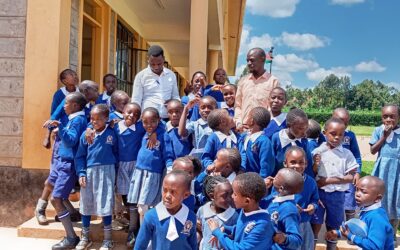
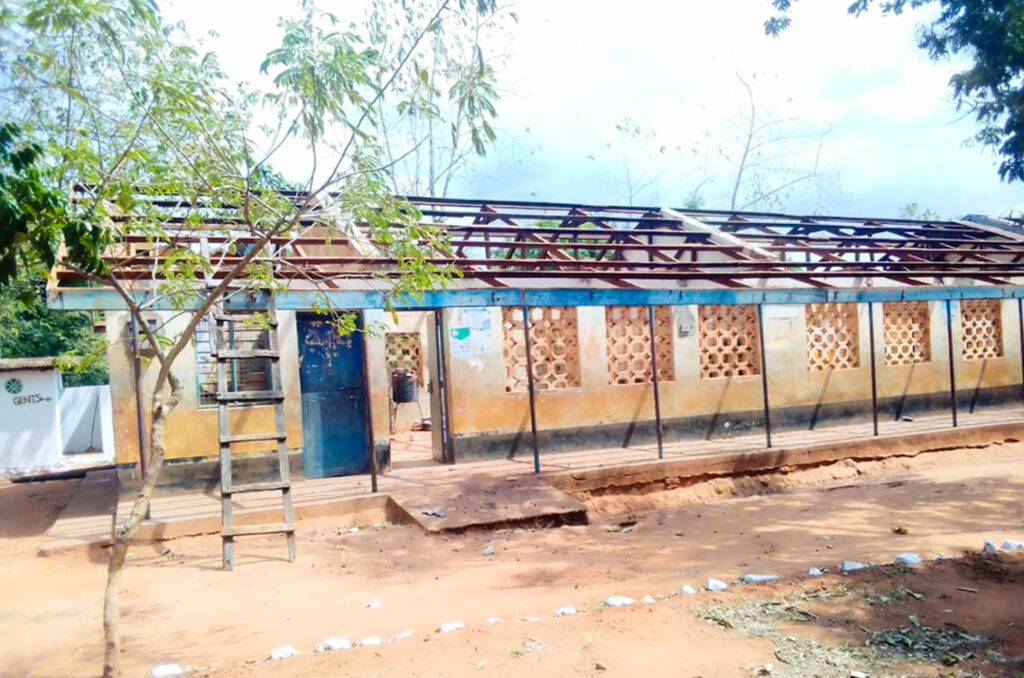
In many rural parts of Kenya, the nearest school with qualified teachers, proper classrooms, and enough textbooks can be an hour’s walk or more from a child’s home. For families already stretched thin by the cost of food, healthcare, and daily survival, that distance, combined with school fees, uniforms, and lost labor at home, can be enough to keep a child out of the classroom entirely. Quality education access in these communities is a matter of basic opportunity.
Why Access Alone Is Not Enough
Building a school building solves part of the problem, but access to quality education requires more than four walls and a roof. It requires trained teachers who understand how children learn, a safe and clean environment, adequate learning materials, and consistent meals so students can concentrate through the school day. A child who walks miles to a classroom with no teacher present, or sits through lessons on an empty stomach, is technically enrolled but not truly learning.
At Akoto Dalizu Premier Academy in Soy, this is the standard we work toward daily. Our teachers are trained and committed to their students long-term, our meal program ensures children have breaktime tea and lunch, and our facilities continue to expand as resources allow. These pieces work together. Remove any one of them, and a child’s ability to learn drops significantly.
The Long-Term Effect on a Community
When a child in an underprivileged area receives a genuine education, the effects extend well past graduation. Educated young people are more likely to find stable employment, understand their legal and civic rights, make informed health decisions, and raise their own children with an expectation of school attendance rather than exception. Communities with higher education rates tend to see reduced rates of early marriage, improved public health outcomes, and stronger local economies, because education gives people tools to solve problems rather than simply endure them.
This is why sponsoring a child’s education has a reach beyond that individual student. A single sponsored child who completes primary and junior secondary school, and goes on to vocational training or further study, can become the person in their family or village who changes what is considered possible for the next generation.
What Stands in the Way
The barriers are well documented and rarely surprising: school fees that outpace household income, a shortage of qualified teachers willing to work in rural postings, long and sometimes unsafe commutes, and the ongoing need for basic infrastructure like clean water and electricity on school grounds. In Soy, our foundation has worked steadily on these fronts, from constructing classroom and administration buildings to developing a school garden and planning for solar power and water filtration systems.
None of this happens without sustained support. A $300 annual sponsorship covers a child’s tuition, meals, and materials, which is a modest figure by global standards but a meaningful one for a family in rural Kenya. Covering a teacher’s salary, roughly $3,000 to $4,000 a year, keeps experienced staff in the classroom rather than moving to better-paying postings elsewhere.
Closing Thought
Every child deserves the chance to learn in a classroom with a present teacher, a full stomach, and the materials needed to actually absorb the lesson. In underprivileged communities, that chance often depends on people outside the community choosing to invest in it. Akoto Dalizu Premier Academy exists because that investment, sustained over years, genuinely changes what is available to a child and, eventually, to their community.