
Kenya’s education system has gone through its most significant reform in decades with the shift from the 8-4-4 system to the Competency-Based Curriculum, now officially rebranded as Competency-Based Education, or CBE. For parents trying to understand what this means for their children, and for a school like Akoto Dalizu Premier Academy working within the system daily, it helps to look closely at what has changed, why, and where things stand as of 2026.
From 8-4-4 to CBC to CBE
The 8-4-4 system, introduced in 1985, structured education around 8 years of primary school, 4 years of secondary school, and 4 years of university, with heavy emphasis on content memorization and a single set of high-stakes national exams determining a student’s next step. The Competency-Based Curriculum was introduced in 2017 to replace it, built around a different structure: two years of pre-primary, six years of primary, three years of junior secondary, and three years of senior secondary, followed by tertiary education or technical training.
In 2025, the Ministry of Education formally rebranded CBC as CBE. Education officials described this as more than a name change: it reflects an effort to align curriculum, teacher training, infrastructure, and assessment around one consistent goal, developing a child’s talents and skills, rather than treating the curriculum document as separate from the rest of the school system. Practically, the CBE framework still follows the same grade structure and core principles established under CBC.
What Makes the Curriculum “Competency-Based”
The defining feature of this system is its focus on what a student can actually do with knowledge, not just what they can recall on an exam. Lessons are built around practical activities: growing plants to understand plant biology, building simple models to understand physics concepts, or working through group projects that require research and presentation skills. Assessment happens continuously through School-Based Assessments and projects, administered through the Kenya National Examinations Council’s CBA portal, rather than resting entirely on one exam at the end of a student’s schooling.
For junior secondary students in Grades 7 through 9, these school-based assessments carry real weight, contributing toward the Kenya Junior Secondary Education Assessment that determines placement into senior school. This continuous model rewards steady engagement over the course of a term, which places more responsibility on schools to keep detailed records and on teachers to manage ongoing evaluation rather than end-of-year cramming.
Senior School and Career Pathways
The first cohort of CBC learners reached senior school in January 2026, entering Grade 10 under three defined pathways: Science, Technology, Engineering, and Mathematics (STEM); Social Sciences; and Arts and Sports Science. Schools are now categorized as “triple pathway,” offering all three options, or “double pathway,” typically offering STEM alongside one of the other two, depending on their staffing and facilities. This is a significant departure from 8-4-4, where every student followed largely the same subject track regardless of interest or aptitude.
To support this transition, the government has committed to constructing 2,600 laboratories nationwide, including physical labs in schools that currently lack them and virtual labs for schools with limited space, with the goal of ensuring every school has some form of lab access by the time learners reach Grade 10. Mathematics was also reinstated as a compulsory subject in senior school after early debate, reflecting an effort to protect core academic skills within the new pathway system.
Where the Challenges Remain
The transition has not been without friction. Teacher shortages have been a persistent concern, with the Ministry working toward a target of over 90,000 teachers in junior secondary to handle both the increased student population and the broader range of subjects the curriculum requires. Resource gaps between well-funded urban schools and rural schools remain a real challenge, which is part of why infrastructure investment, from laboratories to classrooms to basic utilities, has become such a central part of the reform conversation. Education stakeholders, including teacher unions and parent associations, have also pushed for clearer communication and more consultation before further policy changes take effect, prompting the Ministry to commit to more inclusive planning going forward.
What This Means for a School Like Ours
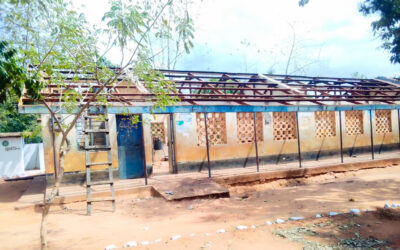
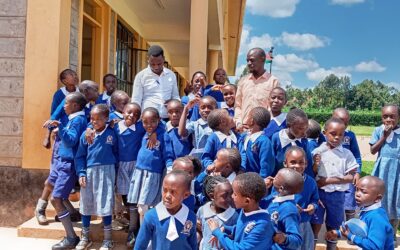
For Akoto Dalizu Premier Academy, operating within the CBE framework means our teachers plan lessons around practical, project-based learning, track continuous assessment carefully, and work to build the kind of facilities, from classroom space to basic learning materials, that this system depends on. The curriculum asks more of schools in terms of resources and teacher training than 8-4-4 did, which makes consistent support for schools in under-resourced areas especially important as this reform continues to mature through 2026 and beyond.